
Jibungoto Planet - Carbon Footprint Web App
About Service
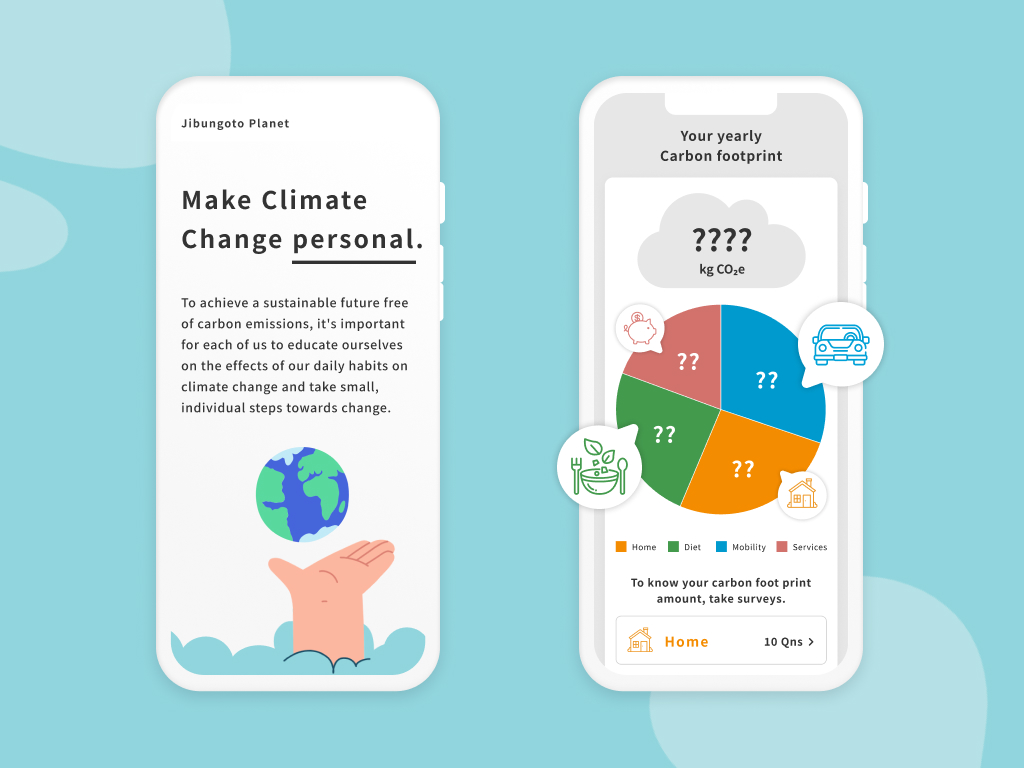
Code for Japan is a civic tech organization that collaborates with local governments to improve community services. We developed Jibungoto Planet, an open-source carbon footprint web application with the National Institute for Environmental Studies to raise awareness about climate change.
The app's source code is publicly available, allowing anyone to start their own project using it. It is available only in Japanese.

Situation
When this project began, there were already other services in the market that needed to be tailored to the needs of the Japanese. Despite the term “Decarbonization” starting to become more widely known, it was still far from people's daily lives.
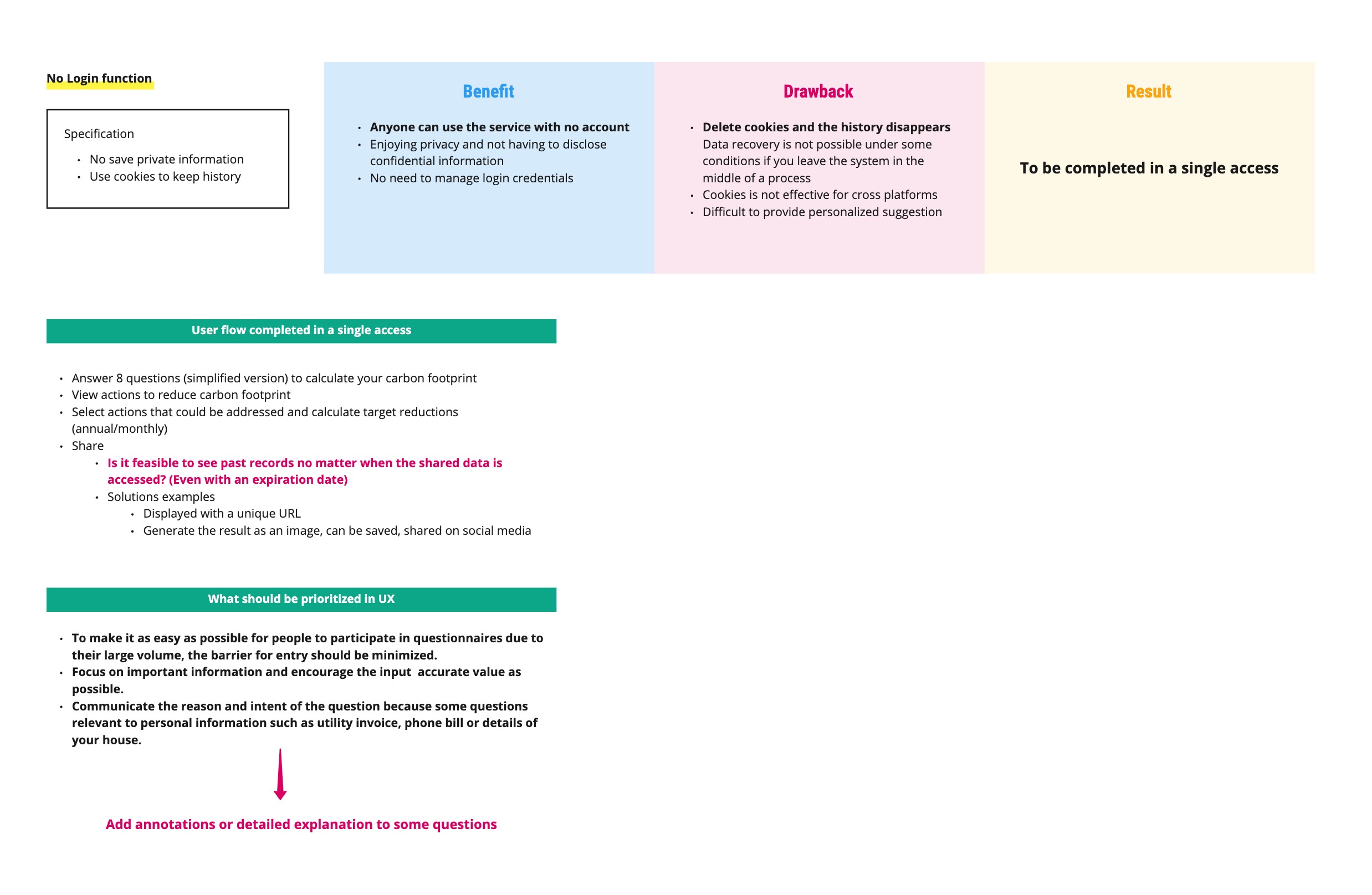
The toughest challenge was that we couldn't include a login feature due to security reasons, so users couldn't retrieve their old results. Additionally, there were limited resources, so some desired features had to be set aside.
Challenging
- No login function
- Limited resources required low maintenance
- Adding value to start the service to users (incentive)
- Schedule Control
Project Details
Project Period
Ongoing
Phase 1: Launched August 2022
Deliverables
- Competitor research
- Flow charts
- User audience workshop
- High-fidelity static mocks
- Prototypes
- Presentation slide
Research
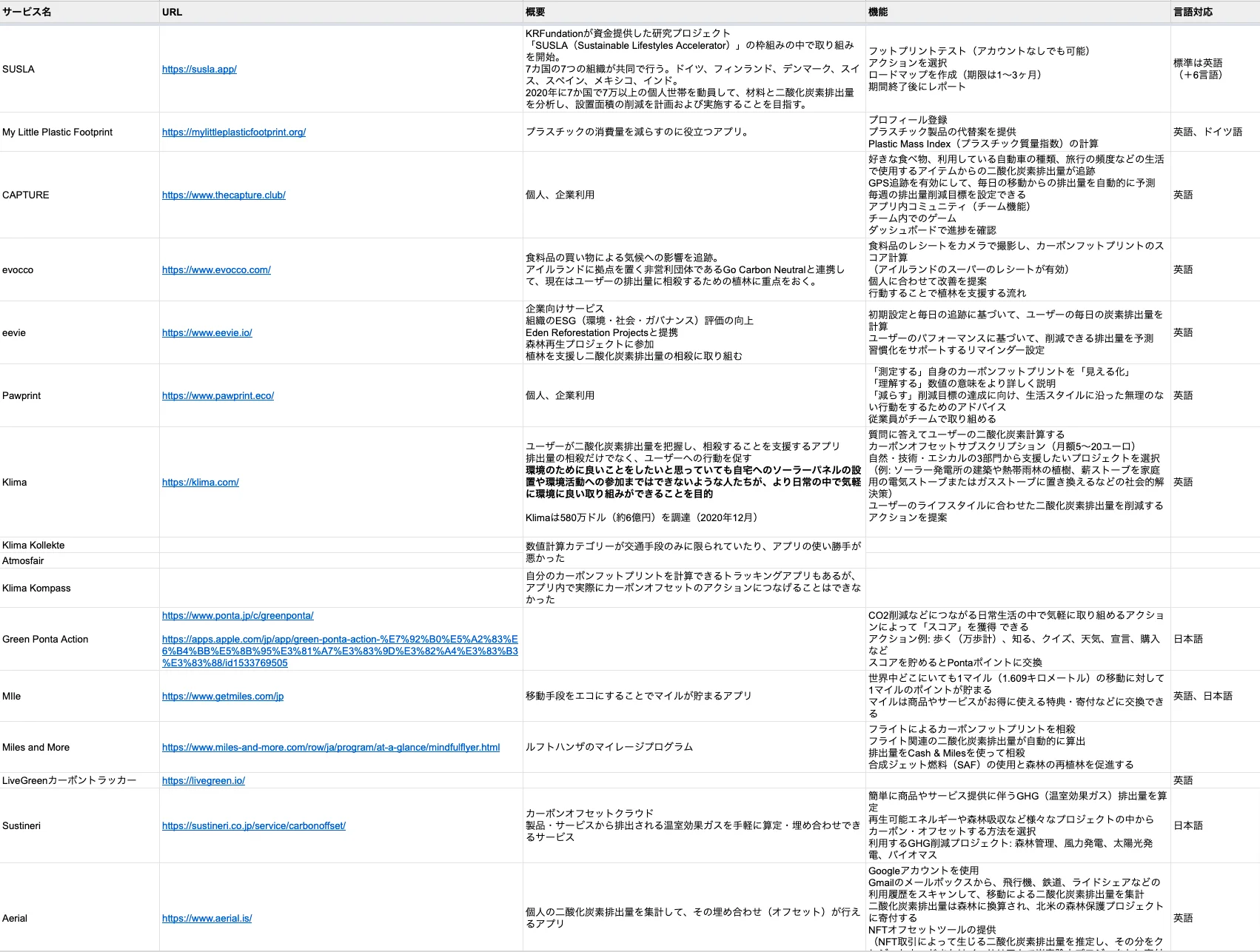
I compiled a list of similar services, noted each one’s characteristics, features, and differences, and then installed a few mobile apps for testing purposes. Took screenshots of screens for each app and gathered all the information in one place. Design research is a critical tool which is essential for the start of any project.

The trend was carbon offsets
Most apps work together with an environmental conservation organization, an individual can promote decarbonization. Through a series of questions, it is possible to calculate an individual’s carbon footprint. As part of the decarbonization effort, the individual can donate to an environmental conservation group dedicated to preserving forests or using renewable energy sources.
Personalization
GPS has been implemented to measure travel distances and provide daily feedback to users about their mode of transportation. This data can then be used to give personalized advice on reducing their carbon footprint.
Identify Requirements
To ensure success, it is essential to determine the user’s needs in order to create a streamlined experience. The project's aim can be accomplished when users are content with the process. Instead of using login credentials, we used cookies to store a user’s history. This allows a user to start the service from the same page, even after restarting it.
What “No Login” Would Bring?
Pros
Cons
Solution
No Menu
The interface of this app is straightforward, with no extra navigation or other options. It focuses on offering the user a single task, which is to calculate their carbon footprint. This is done by answering various questions, and the user can move on.
Give a cue to individuals
The primary purpose of this service is to raise awareness of individuals’ carbon footprints. Our top priority was to make sure users understand their current output, and the design of the flow is aimed at exposing the largest number of people to the service.
Design Thinking Workshop
A workshop was organized to bring in perspectives from people beyond the project team because our target audience needed to be more specific and I wanted to specify it more.
Held the workshop at a social event centred around addressing an issue with the help of civic tech hosted by Code for Japan. The participants of this event backed Jibungoto planet, and around 20 people were involved in the project, consisting of developers, designers and people who suggested good ideas.

Workshop Process
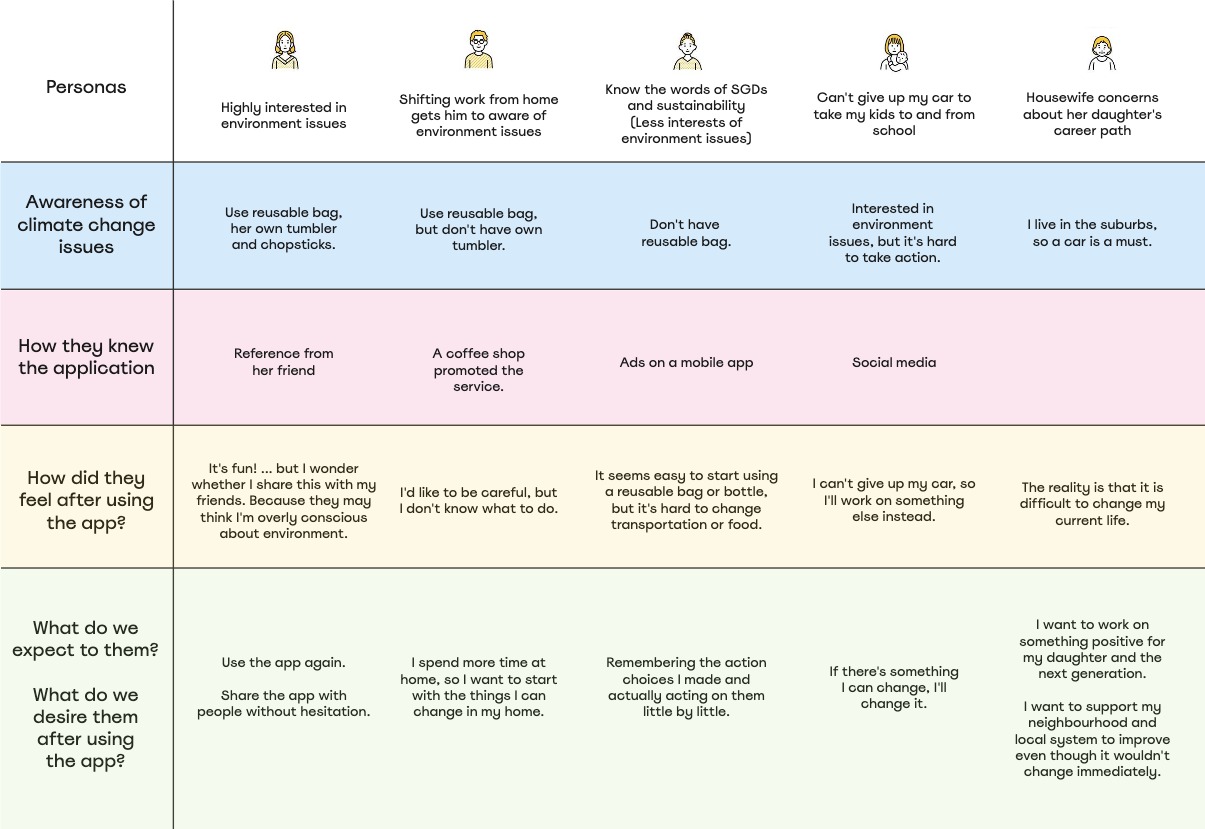
1. Create personas
I asked participants to create a user persona focused on environmental responsibility, such as using a reusable bag, segregating garbage correctly, purchasing items with an earlier expiration date, and supporting local production for local consumption.
2. Think about how the persona felt after using this app
There were some negative opinions.
That user felt…
3. How does the persona know the app
We imagined situations for the personas, such as how they know about the app, where they use it, and whether they are alone or with someone else.
4. What do we desire people to feel after using the app
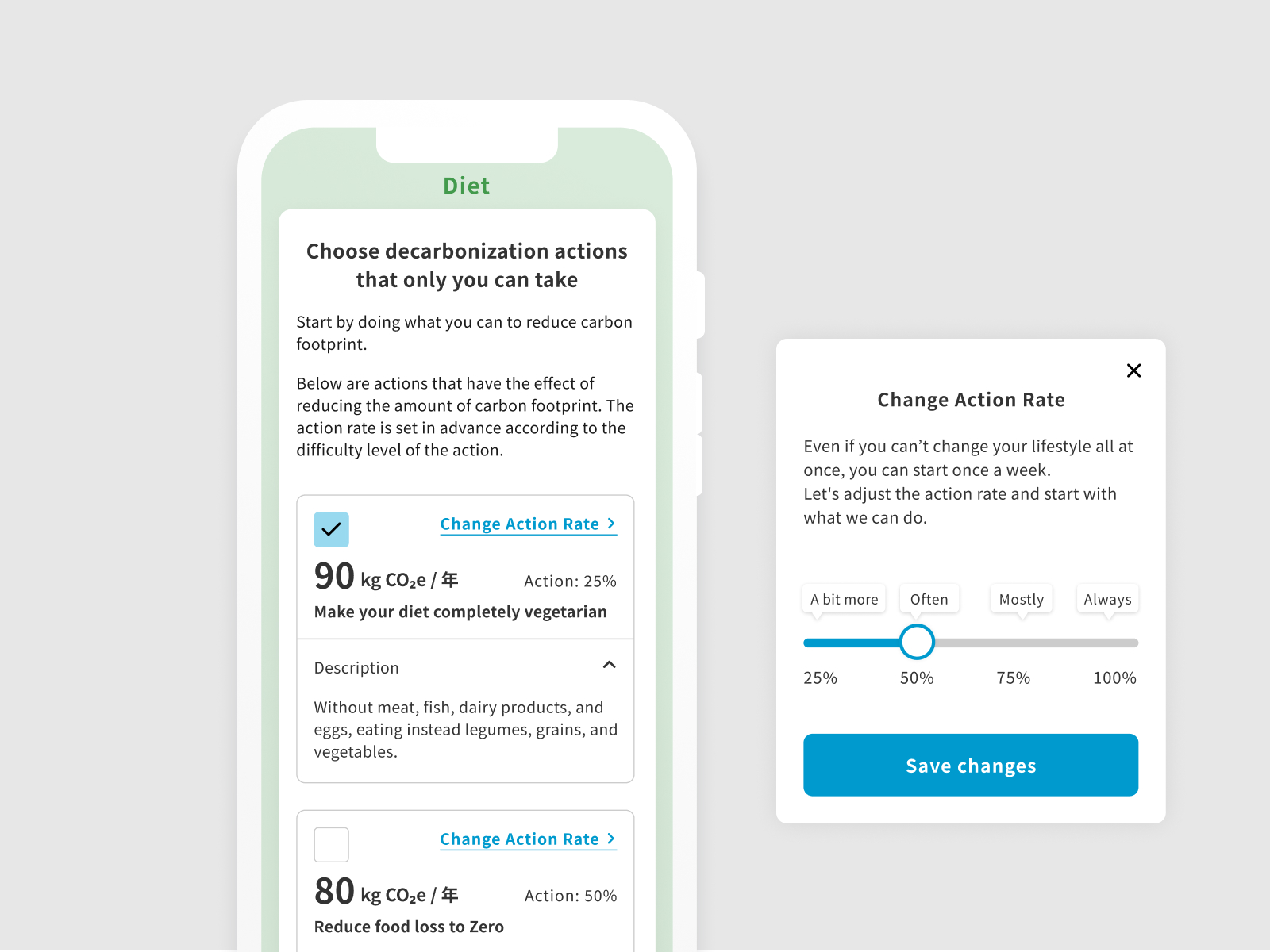
We discussed which decarbonization measures to include in the app and asked the participants to rate their difficulty. It was agreed that proposing only the most challenging steps would lead to demotivation, so the goals should be realistically achievable. All opinions were considered when outlining how the measures would be presented in the app.
What I’ve Learned From Workshop
In reality, not all users take the happy path
We had hoped that users would be motivated to act on climate change that they would answer every question, learn about decarbonization, and take action.
However, only some were as enthusiastic as we had expected; many people wanted to do something but felt overwhelmed by the task.
We made the questions as simple as possible and added extra info to encourage users to answer them. We also thought about how to suggest decarbonization actions that the users could customize to their preferences.
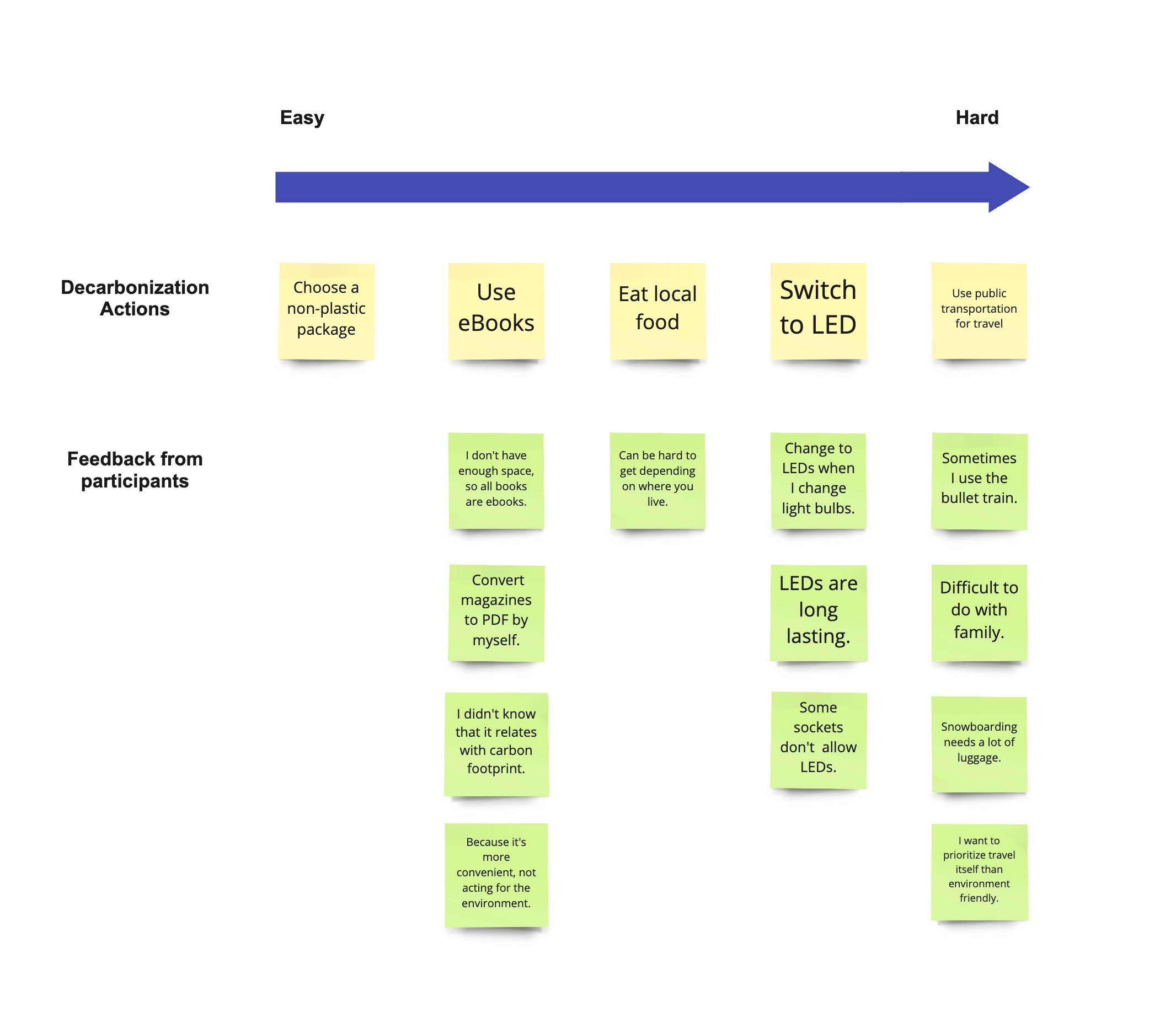
UI Design Process
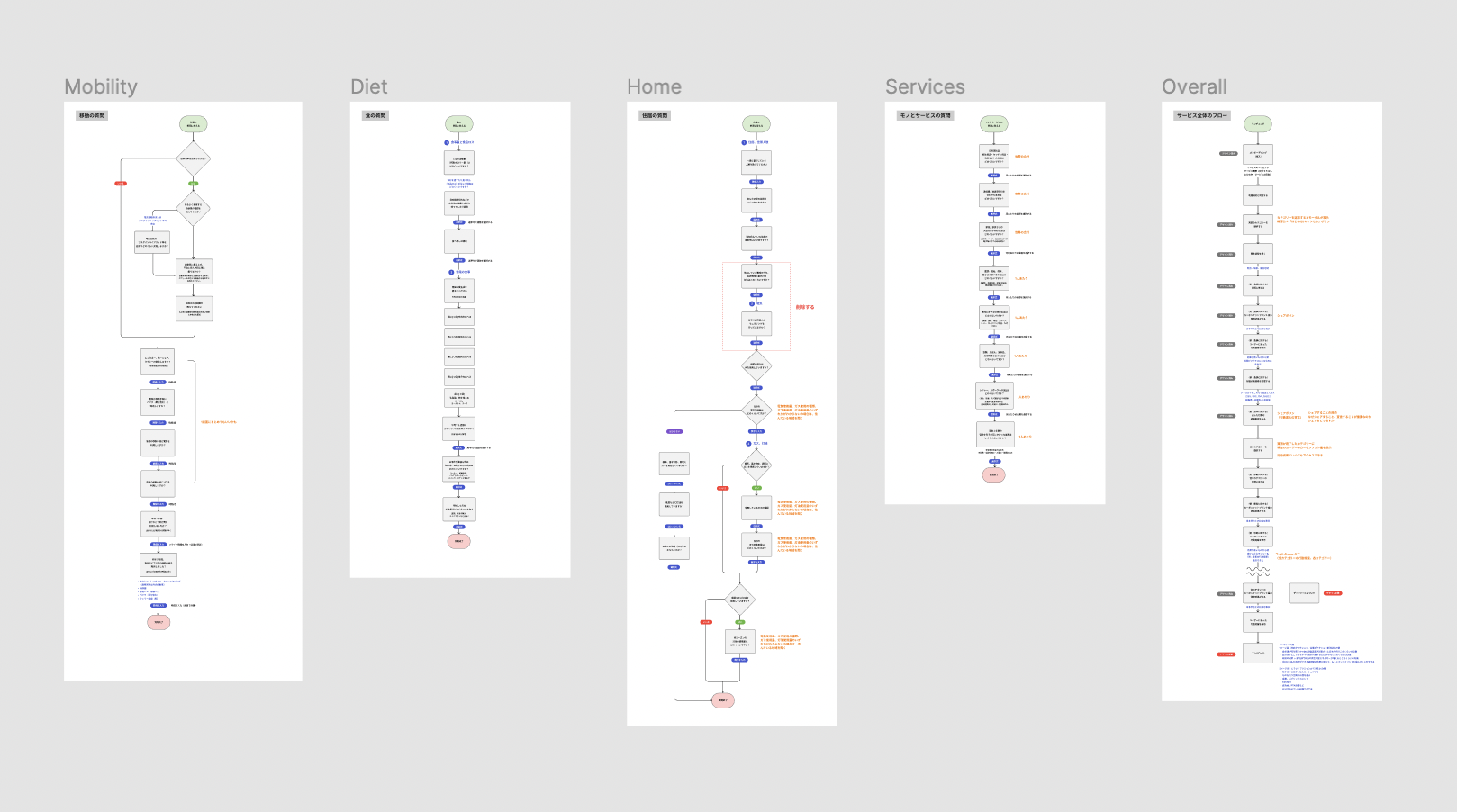
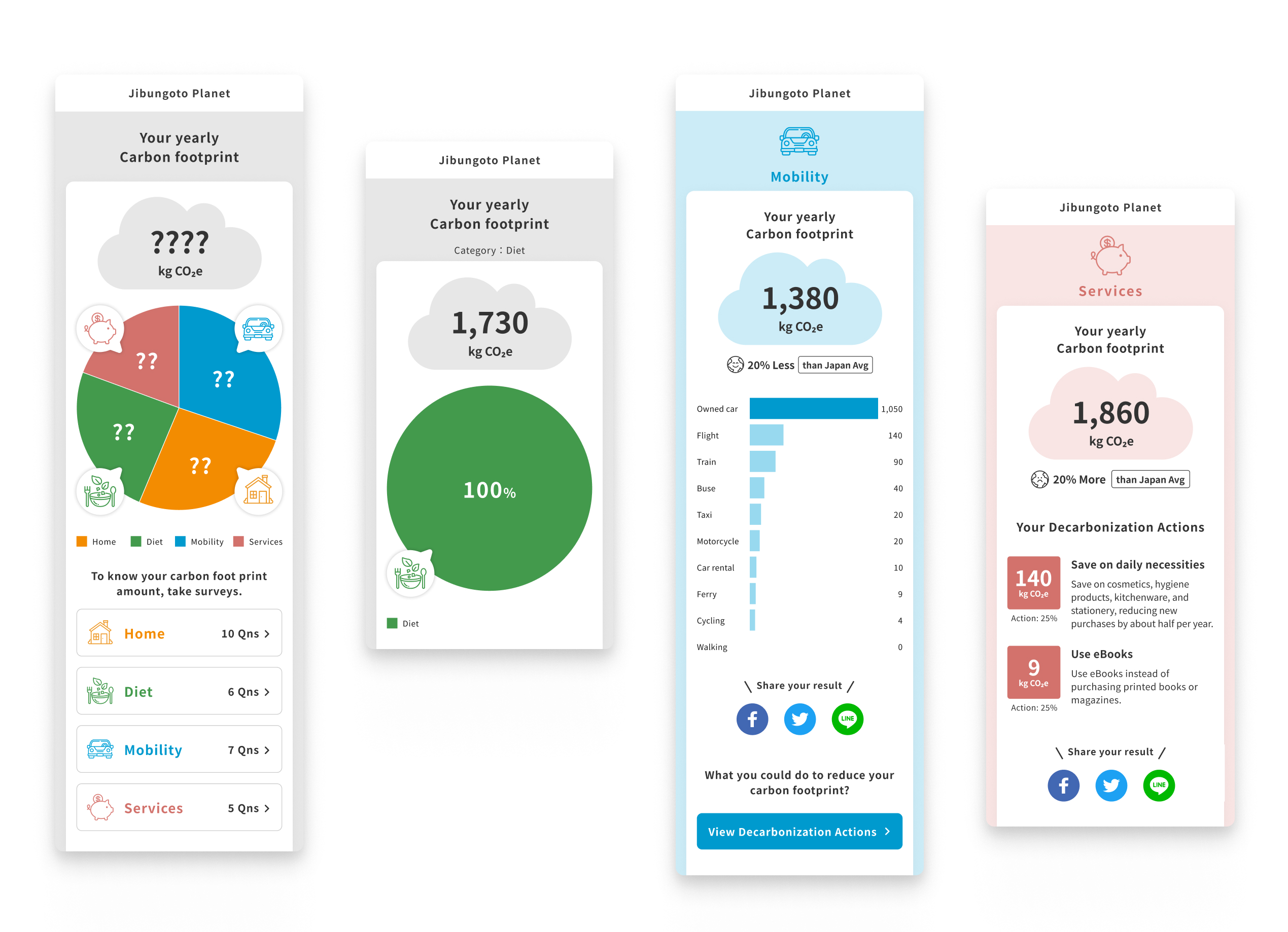
I started to create flow charts following questions for each category which were home, diet, mobility and services.
Flow Charts
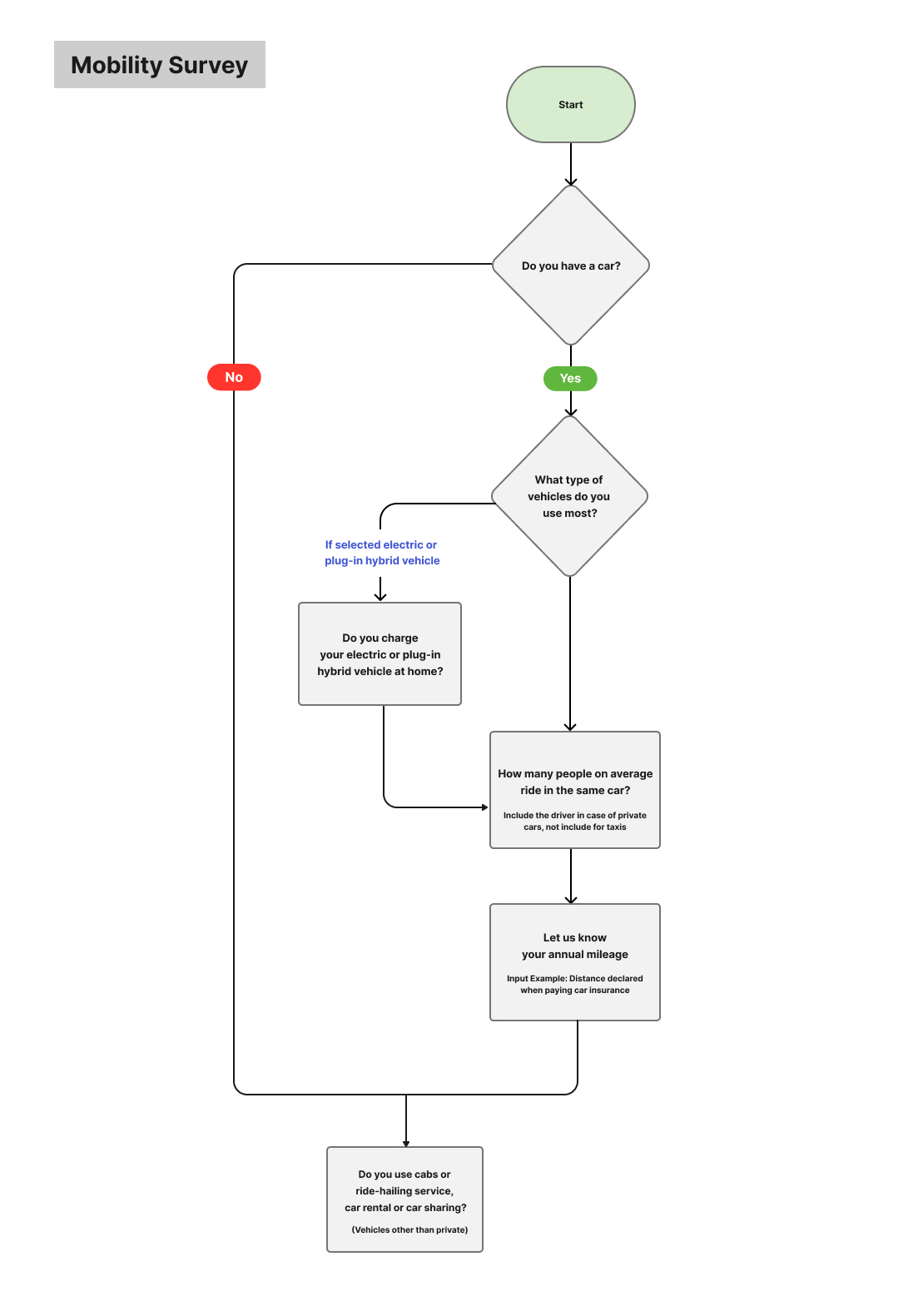
It's often best to create one design for each task when creating flowcharts so that you can easily view the screen when needed and ensure that you don't forget to design any screens.
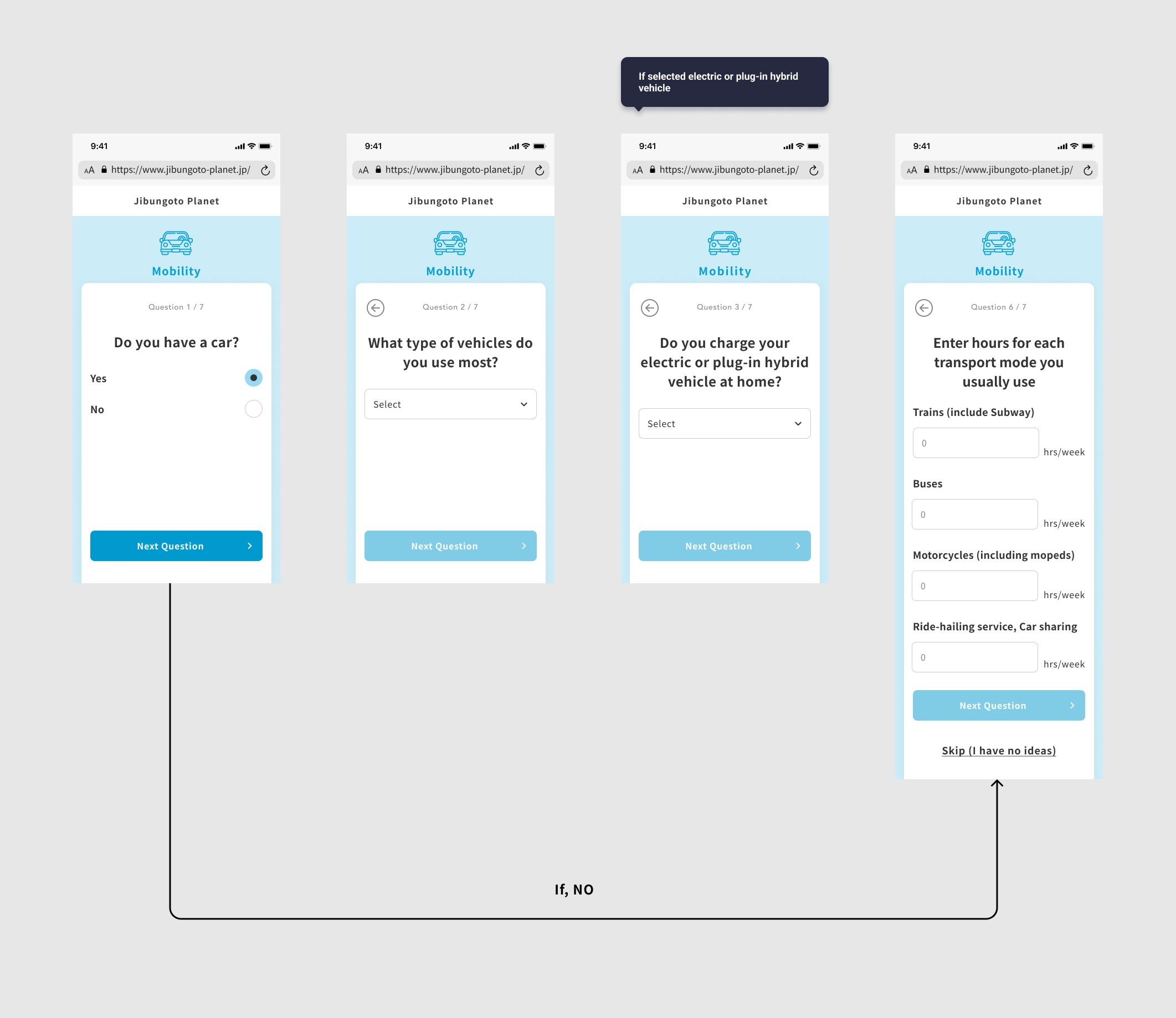
Flow charts can be incredibly helpful for communicating with engineers and gathering feedback. This process allowed for a well-structured UX, as the flowchart was updated and improved in response to feedback from engineers, making the app's flow clear and straightforward.
After Release
Since the launch of Jibungoto Planet in late August 2022, its effects have been far-reaching. Businesses, local governments, and numerous online media have taken notice, as have news programs that have been introduced on their broadcasts. The reach of its influence has grown significantly.
Our organization has been successful in its Minimum Viable Product (MVP) due to the numerous Japanese firms that reached out to us and wanted to cooperate in order to further extend our services utilizing the Jibungoto Planet platform.
2,500 times
used in approximately 3 months
45%
in total used the full service
(took all surveys and selected the actions)
4.5 minutes
spent on the site on average (User engagement time)